
Recruitment Market 2026: When Hiring Is No Longer About Filling Roles, But Solving Growth Challenges
In today’s volatile economic landscape, the global human resources mindset is undergoing a massive overhaul. Rather than simply populating an organizational chart, recruitment is now viewed as a "strategic weapon" to solve scale-up challenges and optimize opportunity costs.
1. From “Do We Have Candidates?” to “Can This Person Drive Growth?”
Over the past two years, the labor market has witnessed a profound shift. Business owners and CEOs are no longer asking HR: “Do we have any resumes for this role?”. Instead, the critical question has become: “Does this individual have the capacity to help us scale the business?”
This is more than a linguistic change; it is a fundamental shift in mindset. Today’s market is not necessarily short of people—it is starving for impact-driven talent capable of delivering measurable outcomes.
The New Realities of Hiring:
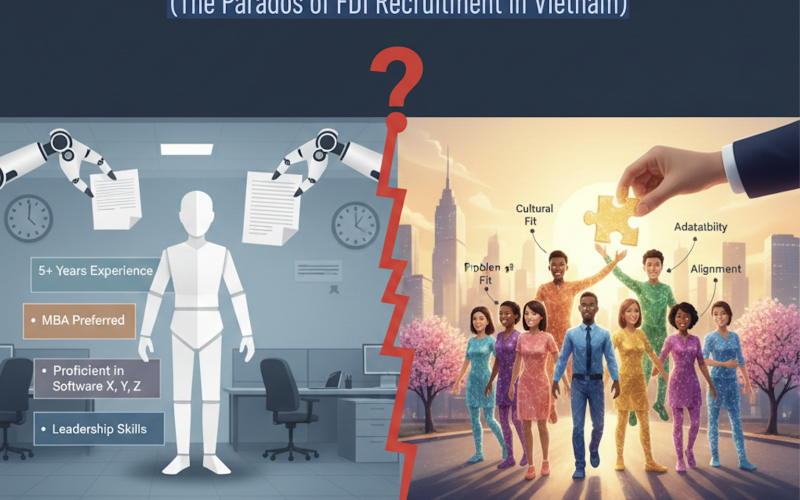
- Polished CV ≠ Real-world Results: An impressive resume is no longer a guarantee of high performance.
- Seniority ≠ Adaptability: Years of experience do not always equate to cultural fit or the agility required in modern business.
- High Compensation ≠ High Efficiency: Premium pay is only justified when it is tied to the ability to solve complex business problems.
2. The "Hidden Iceberg": The True Cost of a Bad Hire
Many companies still mistakenly believe that recruitment costs are limited to monthly salaries. In reality, the opportunity cost of a mismatched hire is the true silent threat to business growth.
A wrong hire triggers a negative domino effect:
- Operational Stagnation: Strategic plans can be delayed by 3–6 months.
- Strategic Misalignment: A mismatched senior leader can steer an entire department off-course.
- Replacement Drain: The compounded costs of re-recruiting, re-boarding, and the "dead time" of the position.
- Cultural Erosion: Diminished morale and productivity among your existing high-performers.
The Verdict: A hiring mistake is no longer just an HR issue—it is a significant business risk.
3. The New Paradigm: Headhunting as a Business Partner
To survive this new era, the role of recruiters is being redefined. They are moving away from being "CV suppliers" to becoming Business Partners. This new model demands a higher level of strategic capability:
Deep Business Model Fluency: Recruiters must understand how a company generates revenue and manages cash flow to identify candidates with a matching commercial mindset.
Accurate Assessment of Business Stages
Hiring strategies must be laser-focused on the company's current maturity level:
| Stage | Hiring Focus | Key Talent Traits |
| Startup | Agility & Foundation | Multitasking, Ownership mindset, "Builder" mentality |
| Scale-up | Execution & Systems | Process optimization, Ability to manage rapid growth |
| MNC | Stability & Structure | Specialized expertise, Navigating complex hierarchies |
4. What High-Performing Organizations Do Differently
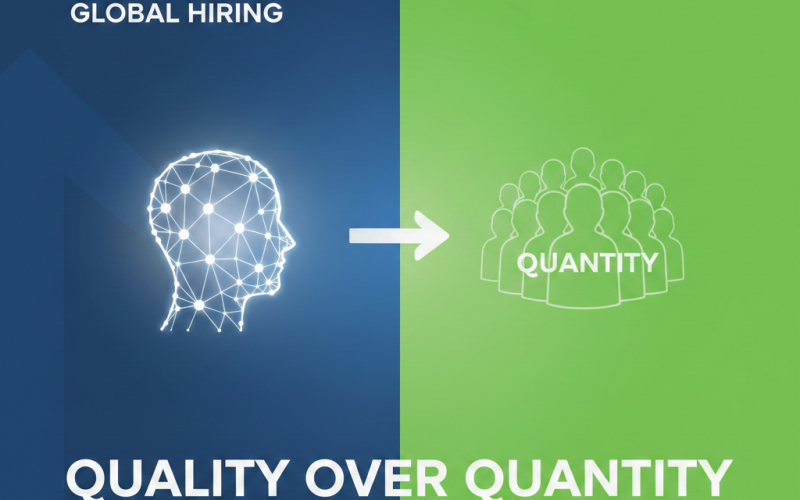
Leading companies are not necessarily hiring more—they are hiring smarter and with higher intentionality.
- Hire Slow for Long-term Fit: They prioritize thorough assessment over short-term urgency to ensure a "perfect match."
- Prioritize Problem Solvers over Titles: They look for individuals who can navigate ambiguity and deliver tangible solutions rather than those who just "look the part."
- Paying for Impact, Not Tenure: They are willing to offer premium packages—but only for talent that creates measurable value.
INT’s Perspective: Recruitment Starts with the Business Problem
At INT, we don’t start with a generic Job Description. We start with one fundamental question:“What specific business problem are you trying to solve?”
From there, we connect you with talent that isn't just "qualified" on paper, but capable of driving real growth. Because at the end of the day: The right hire isn't the one with the best CV—it's the one who provides the best solution.
The 2026 Outlook: Recruitment is about engineering a sustainable future. Organizations that invest in strategic hiring processes today will be the ones leading the market tomorrow.