
Why the Best Candidates Never Apply: The Hidden Talent Market
Are the best candidates actually among those who applied?
A company posts a vacancy for a Country Manager, Sales Director, Plant Manager, Commercial Director, or CTO and receives dozens of applications.
But an important question remains: Are the best candidates actually among those who applied? Often, they are not.
High-performing professionals are typically already employed, delivering results, and not actively looking for a new job. They are known as Passive Candidates—people who may not be applying for jobs but are still open to the right opportunity.
The Hidden Market of Passive Candidates
LinkedIn research has found that around 75% of professionals surveyed consider themselves passive candidates. At the same time, many passive candidates remain open to hearing about relevant career opportunities.
This creates a major limitation for traditional recruitment:
- Job Posting waits for candidates to come to the company.
- Executive Search goes into the market to find the candidates.
For senior and specialized roles, this difference can be critical.
Traditional Recruitment vs. Executive Search
| Traditional Recruitment | Executive Search |
|---|---|
| Post the job | Map the talent market |
| Wait for applications | Proactively identify candidates |
| Focus mainly on active candidates | Reach active and passive talent |
| Screen available applicants | Assess the wider talent pool |
| CV-driven selection | Experience, achievements and fit |
| Suitable for broad-volume hiring | Suitable for difficult and senior hiring |
Executive Search does not necessarily replace traditional recruitment.
Instead, it expands the talent market beyond the people who happen to be applying.
Why Top Talent Doesn't Apply ?
1. They are busy creating results
A successful Plant Manager is focused on production, quality and cost. A Sales Director is focused on revenue, customers and market expansion. A Country Manager is focused on P&L, strategy and growth.
They are running the business—not searching job boards.
2. They don't want to advertise that they are looking
Senior executives may avoid publicly showing that they are considering a career move. However, they may be willing to have a confidential conversation about a genuinely attractive opportunity.
3. They are looking for a career move, not simply another job
Senior candidates care about:
- Business scope and P&L
- Decision-making authority
- Market opportunity
- Leadership responsibility
- Career growth
- Compensation and long-term incentives
- The opportunity to create meaningful business impact
Therefore, sending a JD is often not enough. The opportunity needs to be presented as a career proposition.
Where Passive Talent Matters Most
Passive talent is particularly important in industries where experienced professionals are scarce, including:
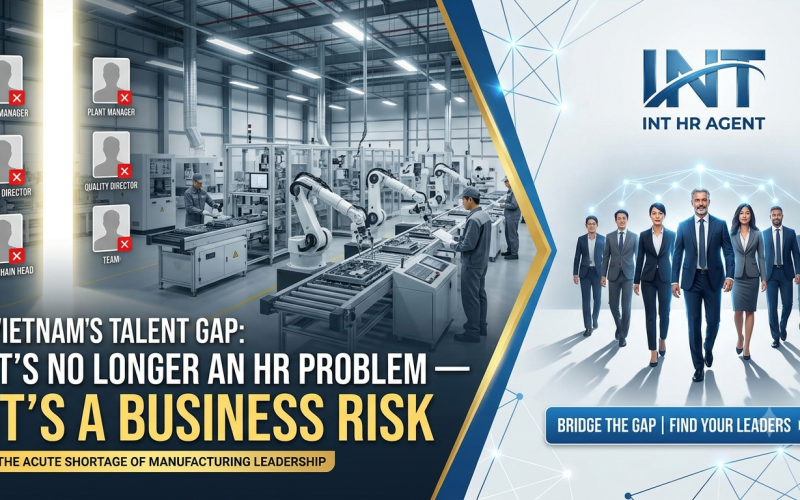
- Manufacturing & Industrial: Plant Managers, Operations Directors, Supply Chain Directors, Engineering Leaders.
- Technology: CTOs, Engineering Directors, Solution Architects, AI and Data Leaders.
- Sales & Commercial: Country Managers, Sales Directors, Commercial Directors and Business Development Leaders.
For these positions, receiving 100 CVs does not necessarily mean having 100 qualified candidates.
The real question is: Who in the market has the experience and track record to solve our business challenge?
What Executive Search Adds
A professional Executive Search process goes beyond collecting applications:
Market Mapping → Talent Identification → Passive Candidate Engagement → Assessment → Shortlisting → Hiring
The objective is not to provide the largest number of CVs.
It is to identify the right people—including those who would never have applied in the first place.
The Real Recruitment Question
For critical positions, companies should move beyond: "How can we get more CVs?"
and ask: "Who are the best people in the market—and how can we get them into the conversation?"
That is where Executive Search and Headhunting create real value.
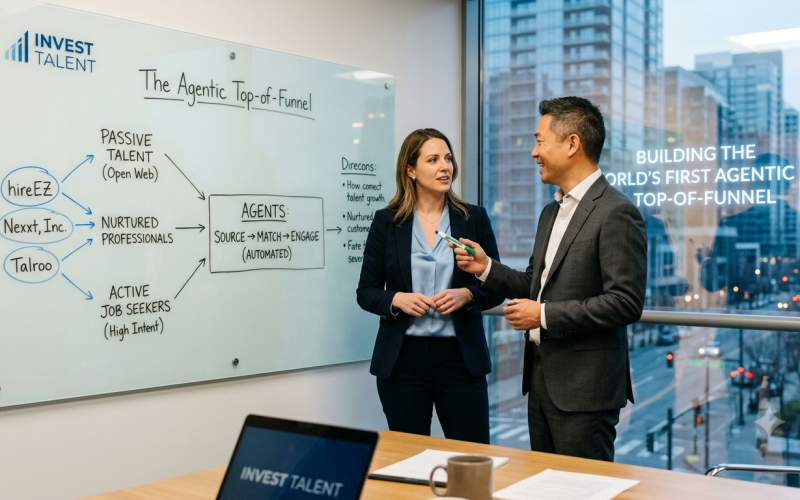
Don't wait for the right candidate to find you. Go and find the right candidate.
Invest Talent – Connecting Businesses with the Right Talent
Invest Talent helps companies identify and engage senior and specialized professionals through Executive Search, Headhunting, and Talent Mapping.
Market Mapping → Talent Identification → Passive Candidate Engagement → Assessment → Successful Hiring
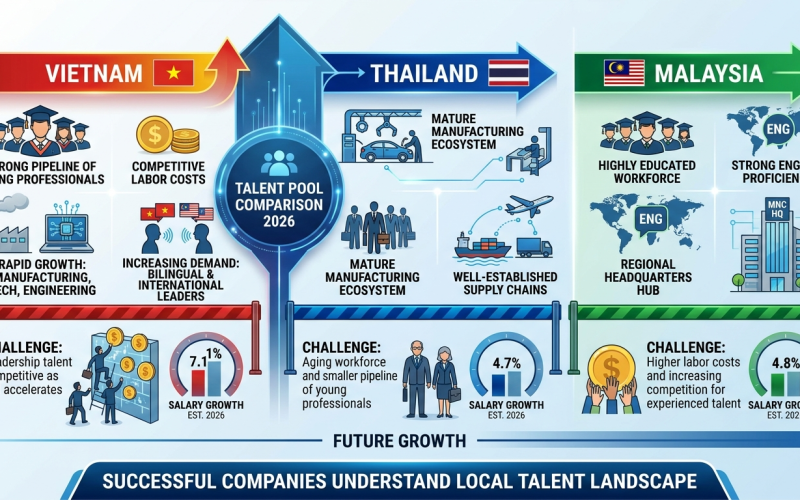
For FDI companies, multinational corporations, and businesses expanding in Vietnam, accessing the right talent can be the difference between simply filling a position and building the right leadership team.
Other Articles