
75% of Talent Isn’t Looking for a Job. So How Do You Reach Them?
What if your best candidate is not among the people applying for your job?
What if your best candidate is not among the people applying for your job?
It is a problem hidden in the numbers. Companies often measure recruitment success by the number of applications they receive.
But for difficult and senior positions, the more important question is:
How much of the available talent market are we actually reaching?
1. The 75% That May Never Apply
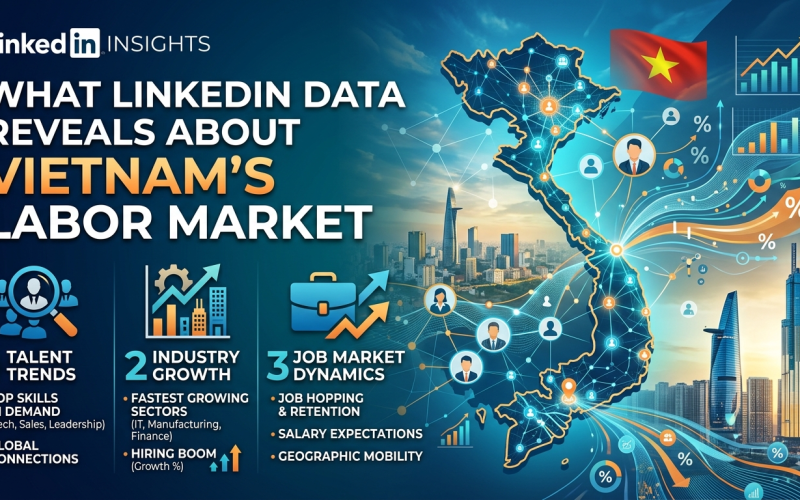
LinkedIn's Talent Trends research found that approximately 75% of working professionals globally identified themselves as passive candidates, while only around 25% were actively looking for a new job.
That means a recruitment strategy based entirely on job postings is primarily designed to attract people who are already looking.
But what about the other 75%?
They may already be:
- Working for competitors
- Managing large teams
- Delivering strong business results
- Leading important projects
- Building new markets
- Running factories or business units
They are not necessarily available, but they may be approachable and that distinction changes the recruitment strategy.
2. 90% Are Open to the Right Opportunity
Here is the more interesting number.
- LinkedIn surveyed 33,000 professionals globally and found that approximately 90% were open to hearing about a new job opportunity.
- This does not mean that 90% of professionals are actively looking for a job.
- It means that being "not actively looking" does not equal "not interested."
A strong professional may be perfectly satisfied with their current position and still consider an opportunity that offers:
- Greater business responsibility
- A larger market
- Higher P&L ownership
- International exposure
- Better leadership scope
- Stronger compensation
- A meaningful career step
This is why the distinction between Active Candidates and Passive Candidates is becoming less useful on its own.
The more important category is: Talent that is open to the right opportunity.
3. The 85% Opportunity Market
LinkedIn's data provides an even more interesting perspective.
Its research found:
- 25% of professionals were actively looking for a new job.
- 15% were beginning to explore opportunities through their network.
- 45% were open to considering a new opportunity when approached by a recruiter.
Together, that means approximately 85% of the professional workforce could be considered "fair game" for recruiters.
- The implication is significant.
- The problem is not that talent does not exist.
- The problem is that different segments of talent require different ways of reaching them.
| Talent Segment | Approx. Share | Typical Recruitment Approach |
|---|---|---|
| Actively looking | 25% | Job boards, career sites, applications |
| Exploring opportunities | 15% | Networking, referrals, recruiter outreach |
| Open to the right opportunity | 45% | Direct approach, Executive Search, engagement |
| Not currently interested | 15% | Long-term relationship building |
*Source: LinkedIn Talent Trends research. *
This is why Job Posting alone cannot represent the entire talent strategy.
4. The Cost of Relying Only on Applications
Company A: Consider two companies hiring the same Commercial Director. Posts the vacancy and waits.
It receives: 100 applications -> The recruitment team screens them and finds 8 potentially relevant profiles.
Company B: Uses a broader search strategy.
It: Maps the market → identifies target companies → identifies high-performing executives → approaches passive talent → assesses the shortlist
- The company may discover candidates who would never have applied.
- The difference is not simply the number of CVs.
- It is the size and quality of the talent market being accessed.
For senior positions, this matters enormously because the candidate who is easiest to find is not necessarily the candidate who is best qualified.
5. Passive Talent Is Particularly Important for Specialized Roles
The more specialized the position, the more important proactive sourcing becomes. Manufacturing & Industrial
Positions such as:
- Plant Manager
- Factory Director
- Operations Director
- Supply Chain Director
- Engineering Director
- Lean / Six Sigma Leader
often require a combination of industry experience, operational scale, leadership capability and measurable business results.
The number of people who genuinely meet all these criteria can be very limited.
Technology For:
- CTO
- Engineering Director
- Solution Architect
- AI Lead
- Data Leader
the challenge is often finding people with the right combination of technical expertise and leadership experience.
Sales & Commercial For:
- Country Manager
- Sales Director
- Commercial Director
- Business Development Director
the strongest candidates are often already responsible for revenue, customers, channels and market growth.
They are busy delivering results—not applying for jobs.
6. What Does the Data Tell Hiring Managers?
The numbers point to a simple conclusion:
More applications do not necessarily mean better access to talent.
If approximately 25% of professionals are actively looking, while a much larger proportion may be open to the right opportunity, recruitment needs to operate beyond the application funnel.
This is especially relevant for companies hiring senior talent.
The recruitment funnel should not end with: Job Posting → Applications → Screening → Interview → Hire
For difficult roles, it should expand into: Market Mapping → Talent Identification → Direct Approach → Candidate Engagement → Assessment → Shortlist → Hire
That is the fundamental role of Executive Search and Headhunting.
7. Executive Search Is About Market Access
Executive Search is often misunderstood as simply "finding candidates."
Its real value is accessing candidates who are not already in your application pipeline.
A professional search process identifies:
- Where is the talent?
- Which companies have the strongest people?
- Who has already delivered the results we need?
- Who is likely to fit our culture and business model?
- What would make this person consider moving?
Only after answering these questions does the recruiter approach the candidate.
This changes recruitment from: "Who applied for this job?"
to: "Who are the best people in the market for this business challenge?"
8. The Recruitment Equation Is Changing
The traditional approach measures: Applications → Interviews → Hires
The modern approach should also measure: Market Coverage → Candidate Quality → Engagement → Business Fit → Hiring Outcome
For a critical leadership role, finding three highly relevant executives can be more valuable than receiving 100 applications.
Because the objective is not to maximize the number of CVs.
The objective is to maximize access to the right talent.
The Best Candidate May Never Apply
The data tells a clear story. 75% of professionals surveyed by LinkedIn identified themselves as passive candidates. At the same time, 90% said they were open to hearing about new opportunities. And LinkedIn's analysis found that as many as 85% could be considered potentially approachable when active jobseekers and passive professionals open to opportunities are combined.
So the real question for companies is not: "How can we receive more CVs?"
It is: "How much of the talent market are we actually reaching?"
For senior, specialized and strategic positions, the best candidate may already be working for your competitor.
- They may never see your job posting.
- They may never send you a CV.
- But they may be willing to listen.
That is where Executive Search makes the difference.
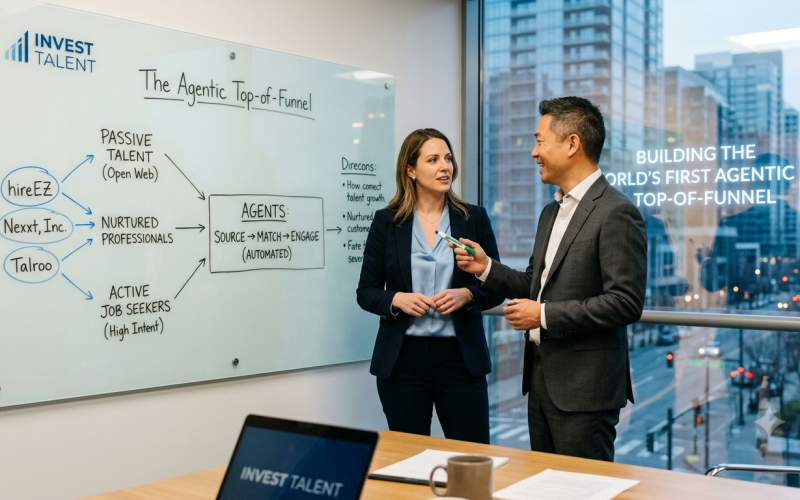
Invest Talent – Accessing the Talent You Cannot Reach Through Job Posts Alone
At Invest Talent, we help companies identify and engage senior and specialized professionals through:
Market Mapping → Talent Identification → Passive Candidate Engagement → Assessment → Shortlisting → Successful Hiring
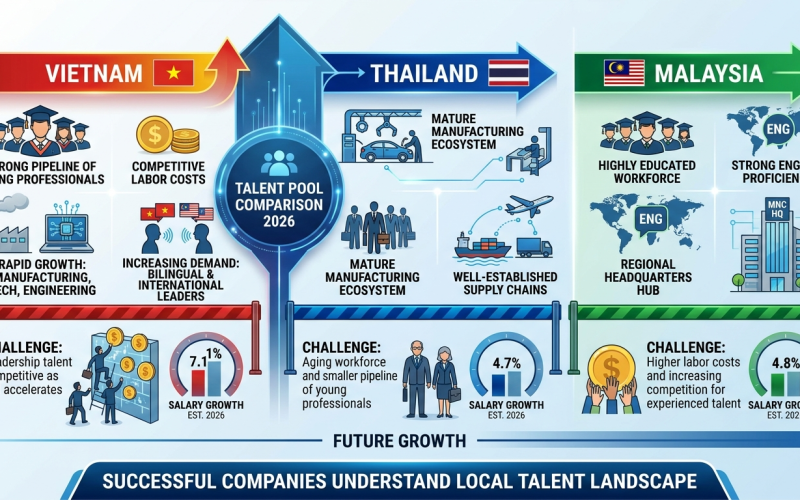
For FDI companies, multinational corporations and businesses expanding in Vietnam, the challenge is not simply finding people who are available.
It is finding people with the capability, experience and track record to deliver the next stage of growth.
**Don't just wait for candidates to apply.
Know where the right talent is—and go after it.**
Invest Talent – Connecting Businesses with the Right Talent.
Sources
- LinkedIn, Active vs. Passive Candidates: The Latest Global Breakdown Revealed.
- LinkedIn, New LinkedIn Report Reveals the Latest Job Seeking Trends, based on a survey of 33,000 professionals.
- LinkedIn, Beyond Active vs. Passive: How Brands Like Dropbox Tap Into “Open Talent”.
- SHRM, 2026 Talent Trends Report.
Other Articles