
2026 Recruitment & Headhunting Trends: Why Hiring Is Getting Harder
The 2026 recruitment and headhunting market is facing an interesting challenge: companies need skilled professionals, while many candidates are actively exploring career opportunities. Yet, matching the right candidate with the right employer is becoming increasingly complex.
For recruitment agencies and headhunters, this changing environment requires more than simply sourcing candidates and presenting CVs. Companies are looking for greater hiring certainty, while candidates are becoming more selective about career moves.
The result is a recruitment market where expectations, skills, timing, and business needs do not always align.
1. Two Sides of the 2026 Recruitment Market
Employers: More Selective and More Focused on Business Impact
Many companies have moved away from large-scale hiring plans and are taking a more targeted approach to recruitment.
Instead of expanding headcount broadly, businesses are prioritizing positions that can:
- Support revenue growth
- Solve operational challenges
- Build new business capabilities
- Support market expansion
- Improve efficiency and productivity
This has increased demand for professionals who combine strong functional expertise with broader business capabilities.
Employers are increasingly interested in T-shaped or Pi-shaped professionals who have deep expertise in one area while also understanding technology, data, automation, or cross-functional business processes.
At the same time, recruitment processes may involve more interviews, technical assessments, case studies, and stakeholder discussions as companies seek greater confidence before making a hiring decision.
Candidates: More Selective About Career Moves
Candidates, particularly experienced professionals, are also becoming more careful when considering a new opportunity.
A career move is no longer based solely on salary. Candidates may also consider:
- Career development opportunities
- Company stability and business direction
- Management style and team structure
- Hybrid or remote working options
- Benefits and total compensation
- Job responsibilities and decision-making authority
- Long-term career prospects
For experienced professionals who already have a stable position, moving to a new company involves a certain level of uncertainty. As a result, the opportunity needs to provide clear and meaningful value.
2. Why Are Employers and Candidates Finding It Harder to Match?
Several structural factors are contributing to the growing gap between employer expectations and candidate expectations.
1. Expectation Gap
- Employers want to hire strong talent at a sustainable cost, while expecting new hires to deliver meaningful results from the start (Day 1 impact).
- Candidates may expect a 20–30% salary increase to justify the risks of leaving a stable position, while companies may have tighter compensation budgets.
2. Skills Mismatch Driven by Changing Job Requirements
- The supply of candidates with purely routine or repetitive skills is increasing, while professionals with combined skill sets are becoming more difficult to find.
- Examples include supply chain + data, technology engineering + practical applications, and finance + global compliance.
3. Trust and Transparency Gap
- Frequent organizational changes and workforce adjustments in recent years have made some candidates more cautious about long-term career opportunities and the business outlook presented during interviews.
- Candidates increasingly value transparency about company performance, business direction, and job stability.
4. Ghosting and Longer Time-to-Hire
- Companies may review too many profiles or delay final decisions while looking for the "perfect candidate."
- A lengthy hiring process can reduce candidate engagement, leading some professionals to withdraw from the process or remain with their current employer.
3. Key Challenges Facing Headhunters in 2026
The changing recruitment market is also reshaping the role of executive search and headhunting firms.
1. Higher Candidate Drop-Off
Candidates may withdraw after receiving an offer for several reasons.
For example, they may:
- Receive a counteroffer from their current employer
- Reconsider the timing of the move
- Have concerns about the new company's business direction
- Receive another opportunity
- Decide that the overall package does not justify the career change
For recruitment firms, maintaining candidate engagement throughout the entire process is therefore increasingly important.
2. Passive Candidate Sourcing Is More Challenging
Experienced professionals are often not actively looking for new jobs.
They may only consider an opportunity when it offers clear advantages in terms of:
- Career progression
- Compensation
- Scope of responsibility
- Company reputation
- International exposure
- Business growth potential
This makes traditional mass outreach less effective.
Headhunters need to understand the candidate's career motivations before presenting an opportunity.
3. Greater Pressure on Recruitment Fees and Terms
Companies are becoming more conscious of recruitment costs and commercial terms.
Recruitment agencies may therefore face discussions around:
- Placement fees
- Guarantee periods
- Payment schedules
- Replacement conditions
- Contingency versus retained search models
This makes it increasingly important for recruitment firms to demonstrate measurable value rather than competing primarily on price.
4. Technology and In-House Recruitment
Internal HR and Talent Acquisition teams now have access to increasingly sophisticated recruitment platforms, databases, sourcing tools, and automation technologies.
As a result, companies can handle more sourcing activities internally.
External headhunters are increasingly engaged when companies need access to:
- Specialized talent pools
- Passive candidates
- Confidential searches
- Difficult-to-fill positions
- Senior-level professionals
- Local market knowledge
- Cross-border recruitment expertise
Technology is therefore changing the role of the recruitment agency rather than simply replacing it.
4. The New Role of Headhunters: From CV Sourcing to Market Intelligence
- The traditional headhunting model was often relatively straightforward:
- In 2026, this model is becoming less sufficient.
- Companies increasingly need recruitment partners who can provide market intelligence and hiring advisory support.
A professional headhunter should be able to help clients understand:
- Whether the salary range is competitive
- How available the required talent is
- Where relevant candidates are located
- Which industries have transferable talent
- What motivates passive candidates
- How long the hiring process may realistically take
- What skills are currently difficult to find
- How the company's requirements compare with the available talent pool
This market knowledge allows companies to adjust their recruitment strategy before investing significant time and resources.
5. What Can Companies Do to Improve Recruitment in 2026?
- Define clear requirements: Separate must-have skills from preferred qualifications.
- Offer a competitive package: Consider salary, career growth, flexibility, and responsibilities.
- Speed up hiring: Keep the interview process clear and efficient.
- Communicate clearly: Help candidates understand the role, expectations, and career opportunities.
- Use recruitment partners strategically: Engage specialized search firms for hard-to-fill roles, passive candidates, or specific talent markets.
6. The Outlook for Recruitment and Headhunting in 2026
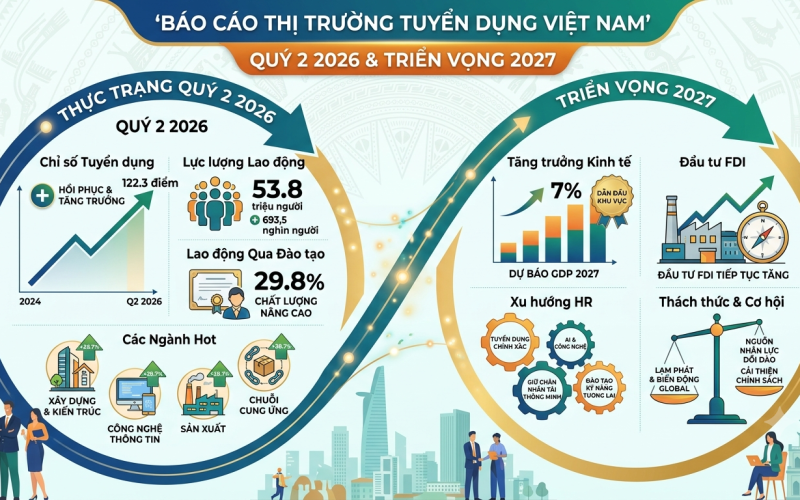
- The 2026 recruitment market is increasingly focused on quality, efficiency, and better alignment between employers and candidates.
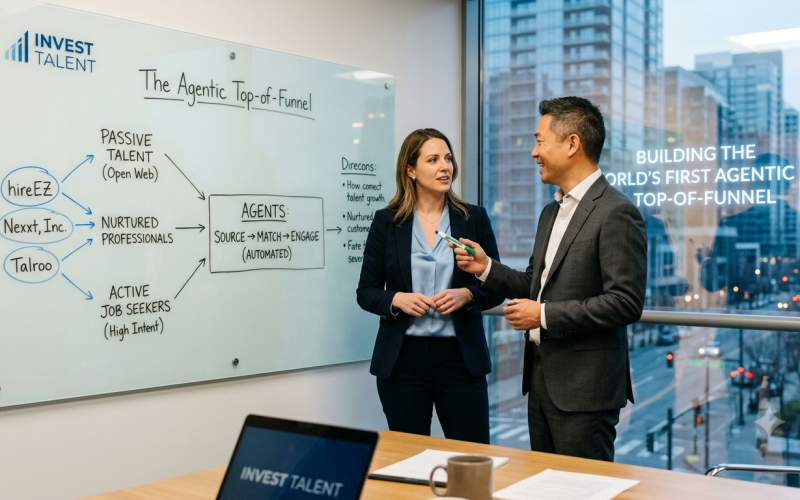
- Headhunters are moving beyond CV sourcing to become talent advisors and market intelligence partners.
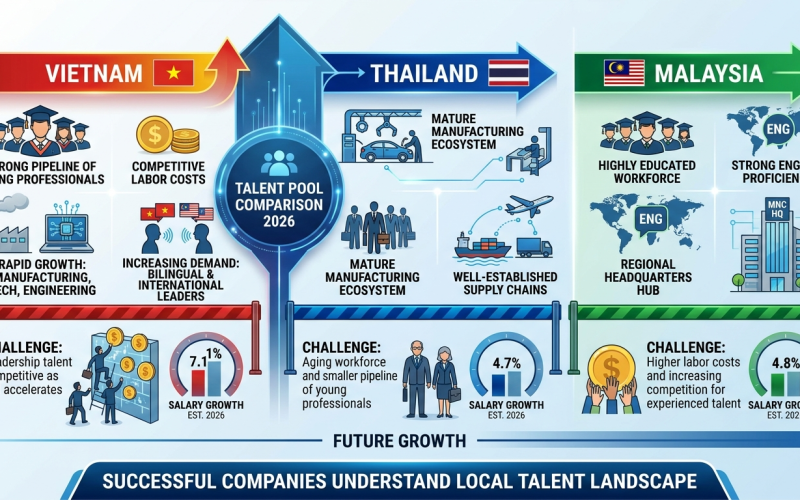
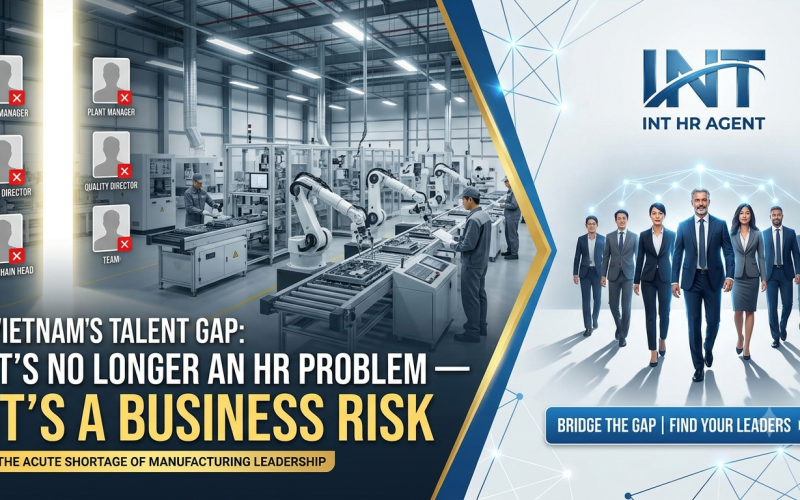
- For companies expanding in Vietnam, understanding the local talent market can help improve hiring decisions and build stronger teams.
- At Invest Talent, we combine executive search, market knowledge, and candidate assessment to connect businesses with the right talent.
7. How Can Recruitment Improve in 2027?
In 2027, better recruitment will depend on better alignment, faster decisions, and greater transparency.
Companies can improve hiring by:
- Setting realistic requirements based on actual business needs.
- Providing clearer information about the role, company direction, and career opportunities.
- Streamlining hiring processes to reduce unnecessary delays.
- Focusing on skills and potential, rather than relying only on traditional qualifications.
- Building stronger candidate relationships throughout the recruitment process.
For recruitment firms, the focus should also move beyond CV sourcing toward market intelligence, candidate engagement, and hiring advisory.
The goal for 2027 is simple: better information, better communication, and better matches between businesses and talent.
Other Articles