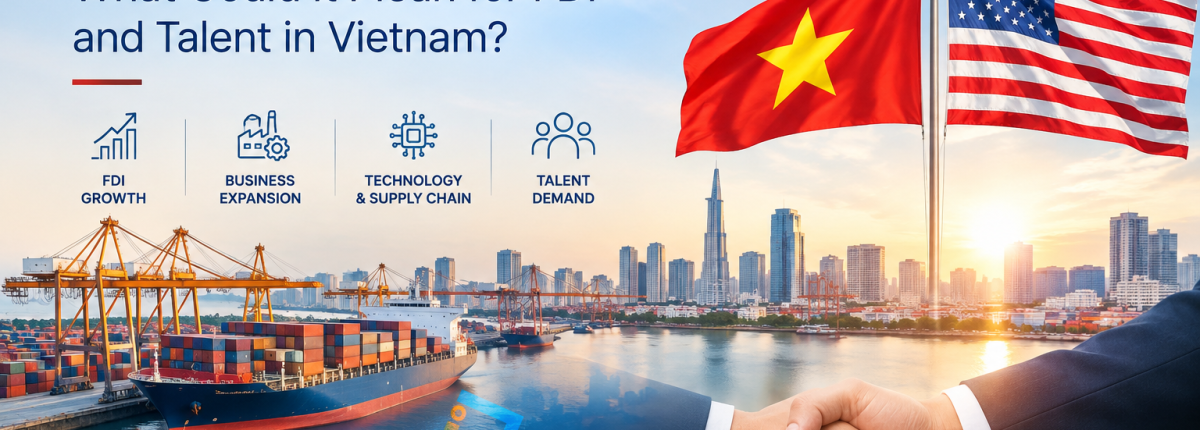
Vietnam–US Trade Agreement: What Could It Mean for FDI, Business and Talent in Vietnam?
The Vietnam–US trade relationship is entering an important new phase.
As of September 2026, negotiations between Vietnam and the United States on an agreement covering reciprocal, fair and balanced trade have made significant progress. Following a meeting in New York on September 21, U.S. Trade Representative Jamieson Greer said the two negotiating teams had made substantial progress and were close to a final outcome. Vietnam's General Secretary and President To Lam also said the negotiations had produced positive results and that the agreement could provide a stable, long-term framework for trade and investment relations.
What Is Being Negotiated?
The discussions build on the framework announced in October 2025. Under that framework, Vietnam committed to provide preferential access for U.S. exports, including removing tariffs on almost all U.S. goods. The United States planned to maintain a 20% reciprocal tariff rate on imports from Vietnam, while allowing certain products to receive a zero reciprocal tariff rate.
However, several important issues remain part of the negotiations.
These include rules of origin, customs enforcement, intellectual property protection, non-tariff barriers, digital trade, investment and measures addressing potential duty evasion.
In May 2026, the U.S. Trade Representative also launched a Section 301 investigation into Vietnam's intellectual-property protection and enforcement practices, making IP one of the issues that could influence the final negotiations.
Why Does This Matter for FDI?
The potential agreement could have implications beyond tariffs.
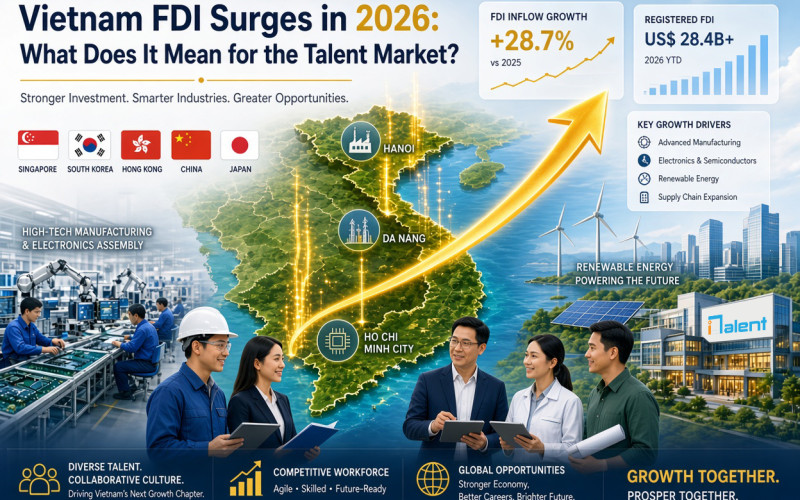
Vietnam is already attracting significant foreign investment in manufacturing, electronics, technology and other export-oriented industries. A more stable trade framework with the United States could make companies more comfortable planning long-term production and supply-chain investments in Vietnam.
At the same time, the agreement may encourage Vietnamese companies and foreign-invested manufacturers to strengthen compliance, traceability, technology, productivity and supply-chain transparency.
Vietnam and the United States have also taken practical steps to strengthen customs cooperation. In June 2026, the two countries signed a memorandum of understanding for real-time electronic customs-data exchange, aimed at facilitating trade, improving supply-chain security and combating customs fraud.
More Than a Trade Agreement
The recent negotiations are already being accompanied by new commercial partnerships.
During President To Lam's September visit to the United States, U.S. and Vietnamese companies were expected to announce agreements involving energy, technology, aviation and financial services. Reuters reported that a list included potential agreements involving companies such as Chevron, ExxonMobil, Qualcomm, Visa, Mastercard and Citibank, although many of the arrangements were expected to be non-binding.
This suggests that the broader relationship could extend beyond traditional goods trade into technology, energy, aviation, digital infrastructure and financial services.
What Could Happen Next?
If negotiations are successfully concluded and the agreement is signed and implemented, several developments could follow.
First, supply-chain investment could continue to evolve. Companies may reassess manufacturing locations, sourcing strategies and the balance between Vietnam, the United States and other Asian markets.
Second, compliance and supply-chain transparency could become increasingly important. U.S. concerns over transshipment and rules of origin mean that manufacturers may face greater pressure to demonstrate where products and components actually come from. Vietnam has rejected allegations that it is simply rerouting Chinese goods and has emphasized genuine manufacturing and compliance with international standards.
Third, higher-value manufacturing could become more important. Rather than competing primarily on labor costs, Vietnamese manufacturers may need to invest more heavily in technology, productivity, quality and skilled employees.
What Does This Mean for Recruitment?
For the recruitment market, this could be one of the most important long-term effects.
As international companies expand or restructure their operations, demand could increase for:
- Supply Chain & Procurement Managers
- Quality and Compliance Specialists
- Manufacturing Engineers
- Engineering Managers
- Logistics Professionals
- Finance and Trade Compliance Specialists
- Technology and Data Professionals
- Bilingual Managers
- International Business Development professionals
The competitive advantage of Vietnam's labor market may therefore increasingly depend on skills, productivity, technology and international business capabilities, rather than simply labor cost.
Looking Ahead
The final details of the Vietnam–US trade agreement remain important. The agreement has not yet been fully signed and implemented, and unresolved issues—including Section 301 investigations, intellectual property, customs and trade-related requirements—could still influence the final outcome.
Nevertheless, the direction is becoming clearer.
Vietnam–US trade relations are moving toward a deeper and more structured economic partnership.
For foreign investors, manufacturers and employers, the next question may not simply be:
"Where should we invest?"
It may increasingly be:
"Do we have the right people and capabilities to compete in Vietnam's next stage of growth?"
That is where investment, trade and talent are becoming increasingly connected.
Other Articles