Asia’s Next FDI Growth Wave: Why Vietnam Is Emerging as a Strategic Investment Destination
How geography, natural resources, regional connectivity and regulatory reforms are reshaping investment opportunities across Asia and Vietnam.
Asia’s FDI Outlook: A New Phase of Strategic Expansion
Asia is entering a new phase of foreign direct investment (FDI), shaped by supply-chain diversification, technological transformation, infrastructure development and changing geopolitical priorities. For multinational companies, the question is no longer simply where production costs are lowest. It is where they can build resilient operations, access growing consumer markets, secure critical resources and expand efficiently across multiple countries.
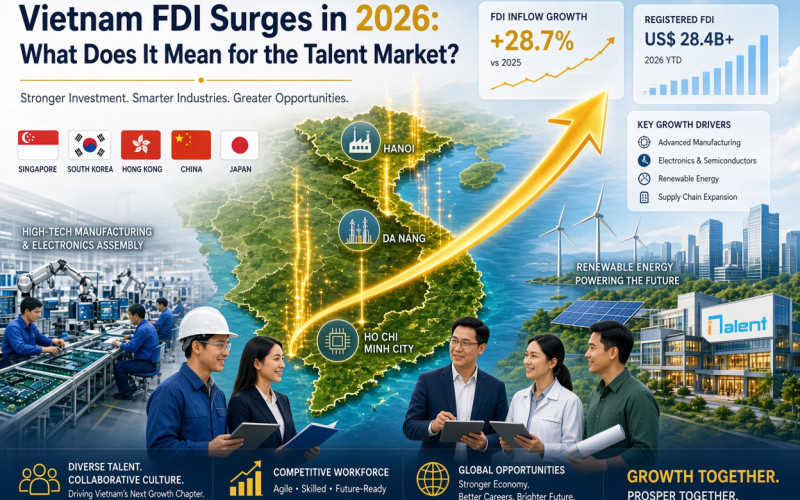
The outlook remains promising despite global uncertainty. According to UN Trade and Development (UNCTAD), developing Asia attracted US$644 billion in FDI in 2025, accounting for approximately 40% of global FDI. Southeast Asia also overtook East Asia as the largest FDI-receiving subregion within developing Asia. Meanwhile, ASEAN attracted a record US$243.9 billion in FDI in 2025, up 9.7% from the previous year. [1][2]
These figures highlight a structural shift: Asia is not merely a manufacturing destination. It is becoming an increasingly important base for advanced manufacturing, technology, logistics, energy transition and regional business operations.
For companies considering expansion, the opportunity lies in identifying the right combination of market access, industrial capabilities, infrastructure, natural resources and regulatory conditions.
1. Geography: Asia’s Strategic Advantage in Global Trade
Asia’s geographical position remains one of its strongest competitive advantages. The region connects major production centres, consumer markets and international shipping routes across the Pacific and Indian Oceans.
East Asia offers established industrial ecosystems and sophisticated supplier networks. Southeast Asia provides access to growing consumer markets, manufacturing locations and regional trade connections. South Asia, particularly India, adds a substantial domestic market and an expanding industrial base.
Within this landscape, Vietnam occupies a strategically valuable position along the western Pacific coastline. Its proximity to China supports access to established manufacturing and supplier networks, while its coastline provides connections to international maritime trade routes serving Northeast Asia, Southeast Asia and markets farther afield.
Vietnam also participates in a broad network of free trade agreements, including the Comprehensive and Progressive Agreement for Trans-Pacific Partnership (CPTPP), the EU–Vietnam Free Trade Agreement (EVFTA) and the Regional Comprehensive Economic Partnership (RCEP). Depending on the product, rules of origin and applicable requirements, these agreements can improve market access and support export-oriented investment.
For manufacturers diversifying production across several countries, Vietnam can complement existing operations in China, South Korea, Japan or other ASEAN markets. The strategic value is not necessarily replacing one country with another, but creating a more flexible regional production network.
2. Natural Resources: Supporting the Next Generation of Industries
Access to reliable supplies of raw materials is becoming increasingly important as investment expands in semiconductors, electronics, electric vehicles, renewable energy and advanced manufacturing.
Asia possesses a broad range of mineral and energy resources. Indonesia is a major player in nickel and downstream battery-related industries, while other regional economies contribute important industrial minerals, energy resources and agricultural inputs.
Vietnam also has significant natural-resource potential, including bauxite, coal, titanium-bearing minerals and rare earth elements. These resources may support opportunities in mineral processing, industrial materials and selected components of advanced manufacturing.
However, resource availability alone does not guarantee a competitive investment proposition. Investors must also assess extraction and processing costs, infrastructure, environmental requirements, energy availability, permitting procedures and long-term supply reliability.
For Vietnam, the greater opportunity is to move beyond exporting raw materials towards developing higher-value processing capabilities, technical expertise and supporting industrial ecosystems. Projects that combine responsible resource development with technology transfer, environmental safeguards and domestic supplier participation may be better positioned for sustainable long-term growth.
Critical minerals are increasingly strategic assets, but commercial viability and regulatory compliance remain essential to any investment decision.
3. Transport and Logistics: Turning Location into Business Value
Geography creates potential; infrastructure determines how effectively businesses can use it.
Across Asia, investment in highways, ports, airports, railways, industrial parks and logistics facilities is reshaping the economics of regional production. Better connectivity can reduce delivery times, improve inventory management and strengthen links between factories, suppliers and export markets.
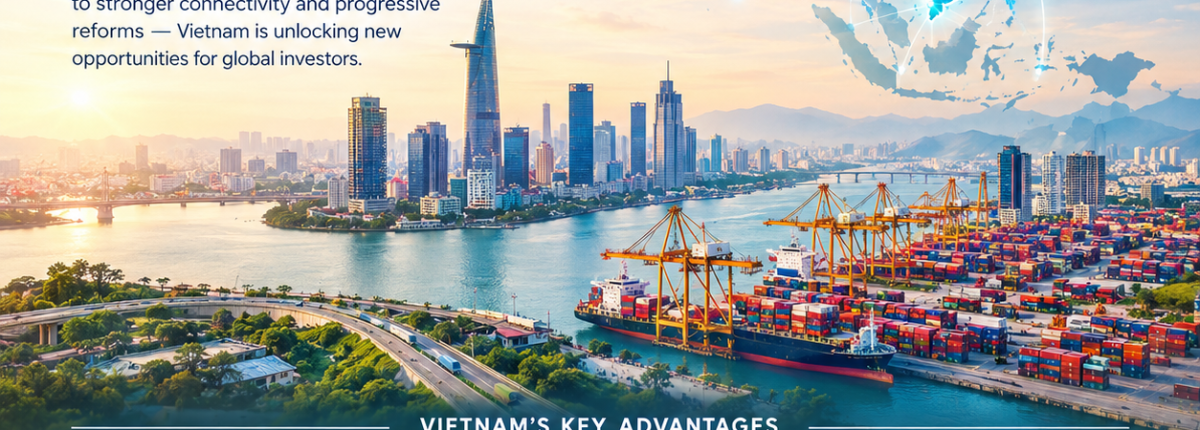
Vietnam is progressively expanding its transport infrastructure to support these requirements. Its development plans include the North–South expressway network, regional ring roads, international airports, seaports and logistics centres. The revised national airport plan targets a network of 36 airports, including 20 international airports, by 2030. [3]
Major economic regions also offer distinct advantages. Northern Vietnam is closely connected to Chinese supply chains and established electronics and manufacturing clusters. The southern region benefits from a concentration of industrial activity, consumer demand and maritime logistics infrastructure. Central Vietnam offers opportunities linked to seaports, industrial development, energy and regional transport connections.
For foreign investors, these differences matter. Selecting a site near suppliers, skilled workers, ports and industrial services can be as important as negotiating land costs or tax incentives.
Nevertheless, infrastructure development remains an ongoing process. Investors should evaluate the actual operating capacity, accessibility, utility availability and completion schedules of relevant projects rather than assuming every planned connection is already available.
4. Regulatory Reform: Vietnam Is Working to Become More Investment-Friendly
Infrastructure and market access are important, but the regulatory environment often determines whether an investment moves from initial interest to implementation.
Vietnam has signalled a stronger commitment to attracting higher-quality foreign investment through institutional reform, administrative simplification and a greater focus on technology, innovation and domestic economic linkages.
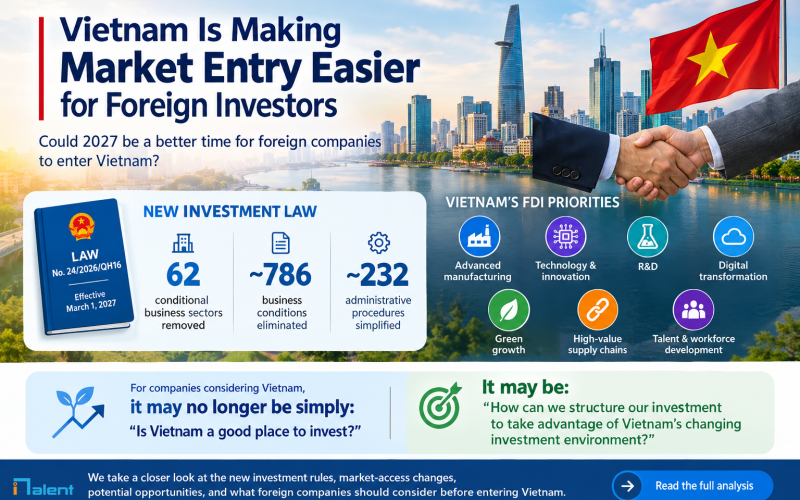
One significant development is the revised Investment Law, Law No. 24/2026/QH16, scheduled to take effect on 1 March 2027. The reform removes 62 conditional business sectors and is expected to eliminate approximately 786 business conditions and 232 overlapping or complex administrative procedures. The government has estimated that the changes could reduce compliance costs by around VND175 billion annually and save approximately 7,500 hours of compliance time. [4]
These changes indicate a shift towards reducing unnecessary barriers to market entry while maintaining safeguards in sensitive sectors. For foreign companies, the potential benefits include a more streamlined business environment and fewer procedural obstacles in affected activities.
Vietnam has also adopted Government Resolution No. 280/NQ-CP, dated 22 September 2026, to implement its broader strategy for developing the foreign-invested economic sector. The policy direction emphasises strategic investment, technology transfer, research and development, workforce training, green and digital transformation, and stronger connections between foreign-invested and domestic enterprises. [5]
The objective is increasingly to attract investment that contributes to long-term economic development rather than simply maximising the number of projects or the amount of registered capital.
Importantly, these reforms do not mean that every industry is open to unrestricted foreign investment. Foreign ownership limits, market-access commitments, licensing requirements, land regulations and sector-specific conditions may still apply. Companies should confirm the rules applicable to their proposed business activities and investment structure.
5. Where the Next Investment Opportunities May Emerge
Several sectors appear particularly relevant to companies planning their next stage of Asian expansion.
Advanced manufacturing and electronics: Businesses are seeking reliable production networks, skilled workers and access to established suppliers. Vietnam can offer opportunities in electronics, industrial components, equipment and supporting industries.
Semiconductors and digital infrastructure: The growth of artificial intelligence, cloud computing and digital services is increasing demand for semiconductor-related capabilities, data centres, power infrastructure and specialised technical talent.
Renewable energy and industrial decarbonisation: Manufacturers face growing pressure to improve energy efficiency and reduce emissions. Investment opportunities may emerge in renewable energy, energy storage, efficient industrial systems and supporting technologies, subject to local regulations and project economics.
Logistics and supply-chain services: As companies diversify production, demand can grow for warehousing, freight management, industrial real estate, distribution and regional supply-chain coordination.
Business services and regional operations: Companies entering Vietnam may require local management, finance, human resources, legal support, sales leadership and customer-facing teams. Businesses operating across several ASEAN countries may also need regional coordination functions.
These opportunities are interconnected. A new factory can generate demand for suppliers, logistics providers, industrial services and professional talent. This multiplier effect is one reason investors increasingly assess the strength of an entire industrial ecosystem rather than a single project location.
6. The Next Competitive Advantage: Talent and Execution
Attracting investment is only the beginning. Companies must still establish operations, build teams, understand local business practices and develop relationships with customers, regulators and suppliers.
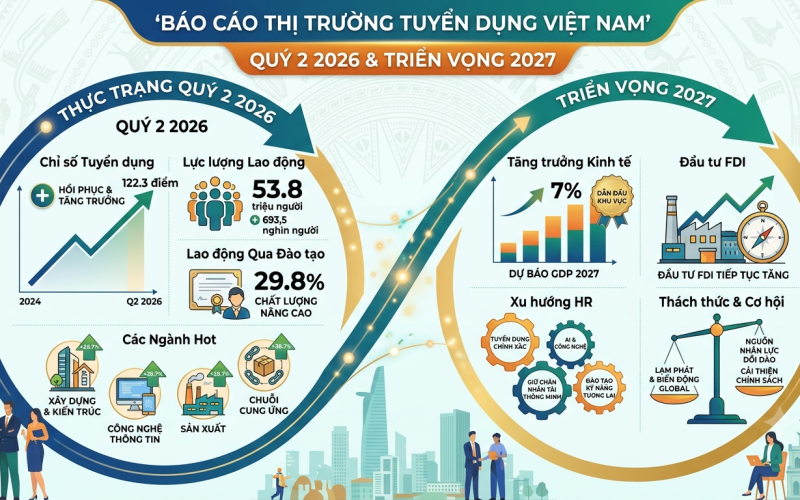
Vietnam’s opportunity will depend partly on its ability to supply the right skills as investment moves into more complex activities. Engineers, plant managers, supply-chain specialists, finance leaders, technology professionals and commercially experienced local executives can all play important roles in turning investment plans into operating businesses.
For international companies entering an unfamiliar market, recruiting the right leadership team early can help reduce execution risks. Local expertise is particularly valuable when adapting regional strategies to local customers, regulations and business conditions.
This creates opportunities for specialist recruitment and talent advisory firms that understand both international corporate expectations and the Vietnamese labour market.
Conclusion: Vietnam’s Opportunity Within Asia’s Next Growth Cycle
Asia’s next FDI growth phase will be shaped by more than labour costs or short-term incentives. Geographic advantages, access to resources, logistics connectivity, industrial ecosystems, regulatory predictability and workforce capabilities will increasingly determine where companies establish their next operations.
Vietnam offers a compelling combination of coastal connectivity, proximity to major Asian supply chains, natural-resource potential, expanding infrastructure and ongoing regulatory reform. Its participation in major trade agreements further strengthens its relevance for companies seeking an export-oriented production base or a platform for wider ASEAN expansion.
However, investment decisions still require careful assessment of market demand, operating costs, infrastructure readiness, legal obligations and talent availability.
For businesses prepared to evaluate these factors strategically, Vietnam can serve not only as a manufacturing location but also as a foundation for building more resilient, connected and competitive operations across Asia.
The next investment cycle will reward companies that prepare early, choose their locations carefully and build the right local capabilities. For Vietnam, the challenge is to convert its strategic advantages into higher-value investment, stronger domestic supply chains and sustainable long-term growth.
References
[1] UN Trade and Development (UNCTAD), Developing Asia Leads Investment Among Developing Regions as Patterns Shift Within the Region, 7 July 2026.
[2] ASEAN, ASEAN Attracts Record FDI in 2025 Amid a Shifting Global Investment Landscape, based on UNCTAD’s World Investment Report 2026.
[3] Government of Vietnam, Viet Nam Releases Revised National Airport System Development Plan, July 2026.
[4] Government of Vietnam, Law No. 24/2026/QH16 Amending and Supplementing Certain Articles of the Investment Law, effective 1 March 2027.
[5] Government of Vietnam, Resolution No. 280/NQ-CP on the Action Plan for Developing the Foreign-Invested Economic Sector, 22 September 2026.